It has been a while since I have had to go this deep into a motor. I studied armatures, brushes, stators, and commutators during undergrad, but after graduating 25 years ago I have not had many reasons to open a motor and troubleshoot it at this level.
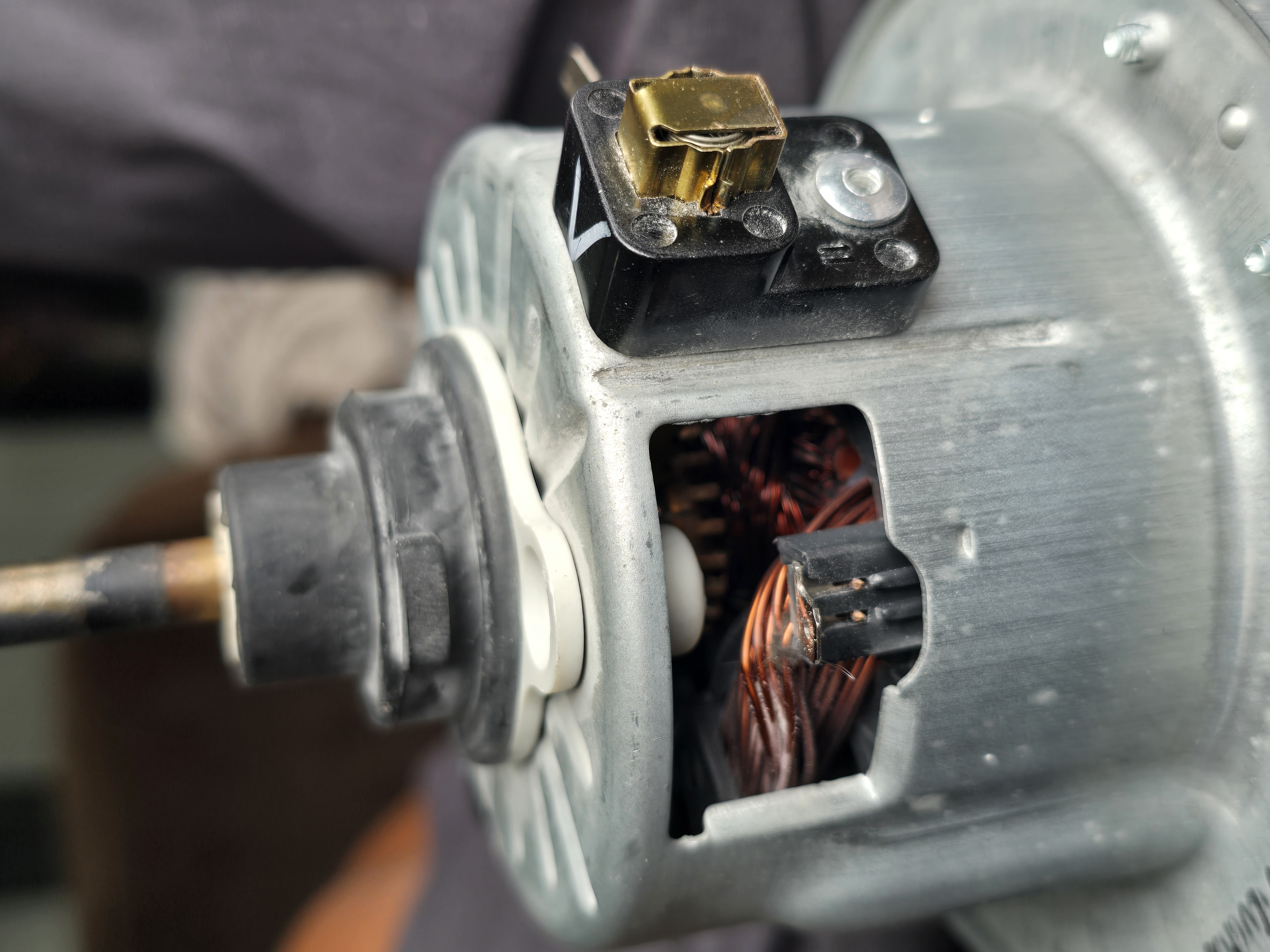
This repair started with a vacuum cleaner motor that stopped working. The root cause turned out to be simple: one of the carbon brushes was stuck inside its brass holder and was no longer making contact with the commutator segments on the armature. After taking the assembly apart, cleaning out the dust, and putting it back together, the motor started working again.
But the story really started with the pool pump.
The pool pump problem
A few days ago I noticed that when I turned off the pool pump, it would pull bubbles from the filter side. Those bubbles would make the pump lose prime. I tightened fittings, checked the obvious places, and tried the usual fixes. Eventually I concluded that there was likely a leak on the suction side of the pump, allowing air to enter the system.
That air was then accumulating on the pressure side, toward the filter. Ideally, the filter should push the air out through the return line and back into the pool. That was not happening. My theory was that the sand inside the filter was trapping the air.
The sand was almost five years old, from when the filter was installed. Over time, sand particles get rounded and lose some of the sharp edges that make them effective as filter media. I decided it was time to change the sand and see if that would also solve the air problem.
Removing wet sand from a pool filter is not an easy job, especially with the central column and laterals still connected. I ended up using the vacuum cleaner to pull the wet sand out. I was careful not to let the basket fill up, but apparently some sand still made it into the vacuum cleaner.
That is what caused the next problem.
How the vacuum cleaner failed
The sand that got into the vacuum cleaner appears to have worked its way into the motor area and blocked one of the carbon brushes from sliding freely in its brass holder. As the brush wore down, it needed to move forward to maintain contact with the commutator. Because it was stuck, it eventually stopped making contact, and the motor stopped running.
At first, I cleaned up what I could and tried to run the vacuum again. It still did not start. That meant I had to open the motor assembly and trace the electrical path.
In this type of motor, the current path goes from the terminals through the stator winding, then through one brush to the commutator, through the rotor winding, back out through the brush on the other side, then through the stator and back to the other terminal.
After checking continuity across different parts of the circuit, it became clear that one of the brushes was not making contact with the commutator.
The brush holder
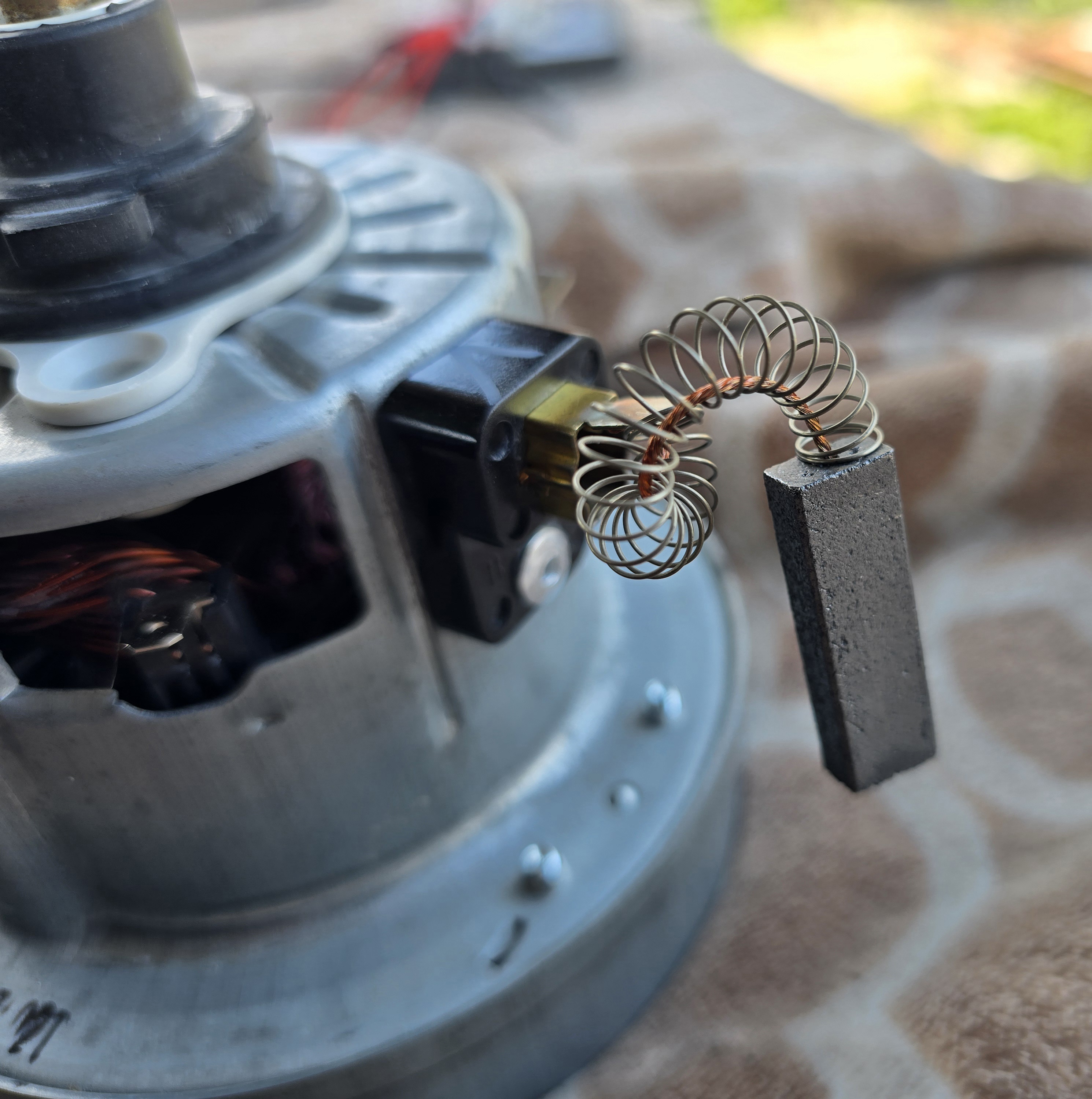
The carbon brush sits inside a small brass holder. The holder is essentially a hollow tube, and the brush needs to slide back and forth inside it. A spring pushes the brush forward so it maintains contact with the commutator as the brush wears down.
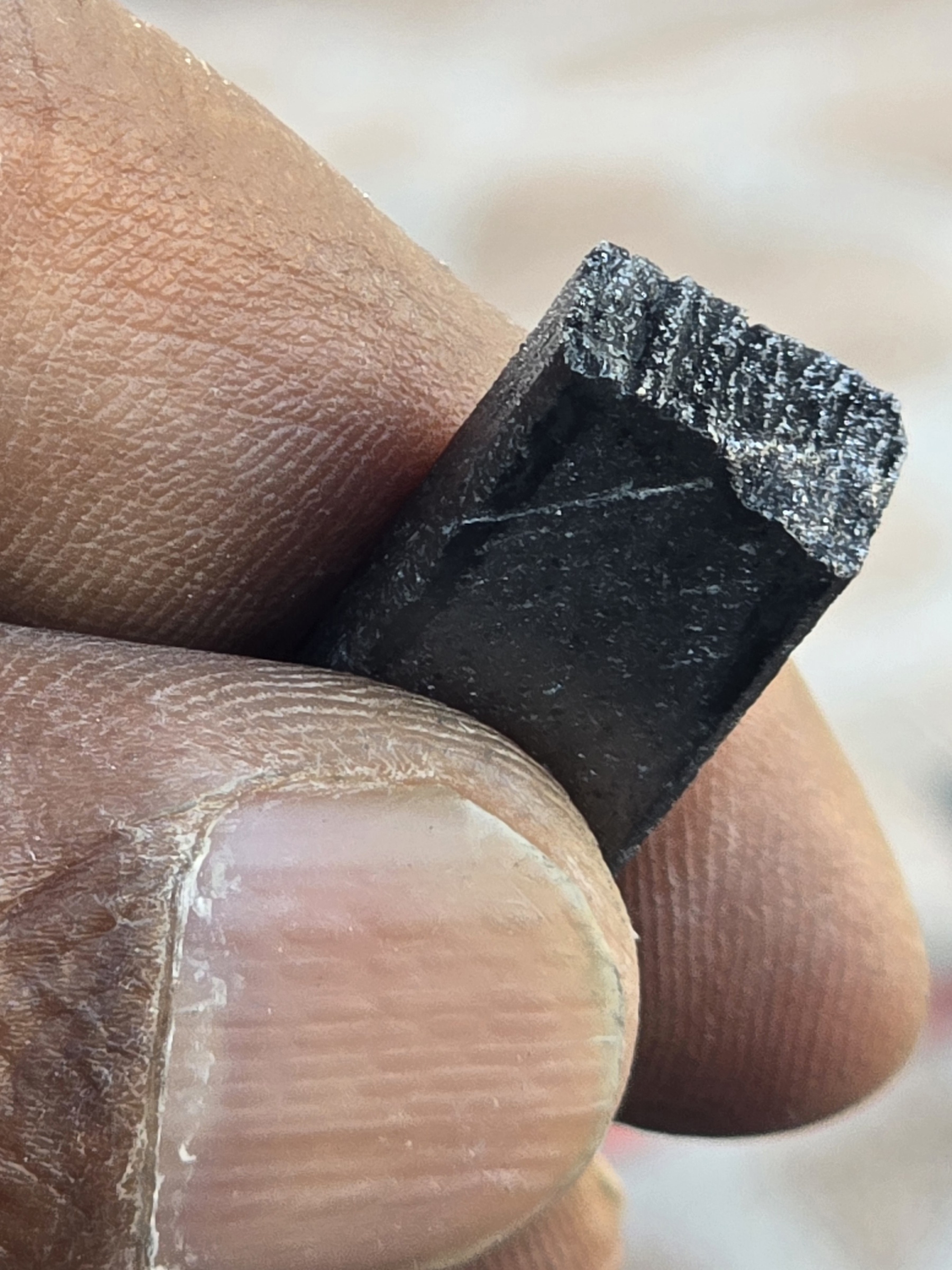
When dust, grit, or debris gets inside that holder, the brush can jam. That is what happened here. The brush was present, but it was stuck and could not move forward enough to touch the commutator.
Once I removed the brush assembly and cleaned out the dust, the brush was able to slide again. I reassembled the motor, tested it, and the vacuum cleaner started working.
Back to the pool pump
The pool filter sand change also worked. After replacing the sand, the pool pump no longer loses prime when I turn it off. That means I can go back to running the filter on a normal schedule, around 8 to 10 hours a day, instead of running it 24 hours a day just to avoid losing prime.
That should reduce some electricity usage, and it also confirms that the filter sand was likely contributing to the air-trapping issue.
Takeaways
This was a fun repair because it connected two different problems:
- Old pool filter sand was likely trapping air and causing the pump to lose prime.
- Removing wet sand with the vacuum cleaner allowed some sand or dust into the motor.
- That debris jammed a carbon brush inside its brass holder.
- The stuck brush stopped making contact with the commutator.
- Cleaning the brush holder restored motion, contact, and motor operation.
It was a good reminder that many electrical failures are still mechanical at the root. In this case, the circuit was fine. The motor could not run because a small carbon brush could not slide forward a few millimeters.
Fun stuff.